How to Generate B2B Leads in 2026
Most B2B companies generate leads.
However, very few generate the right ones.
And even fewer turn them into revenue.
In 2026, lead generation is no longer about activity.
Instead, it is about building a system that connects marketing with sales.
Why B2B lead generation doesn’t work
Many companies invest in marketing.
However, results remain inconsistent.
This usually happens for a few key reasons:
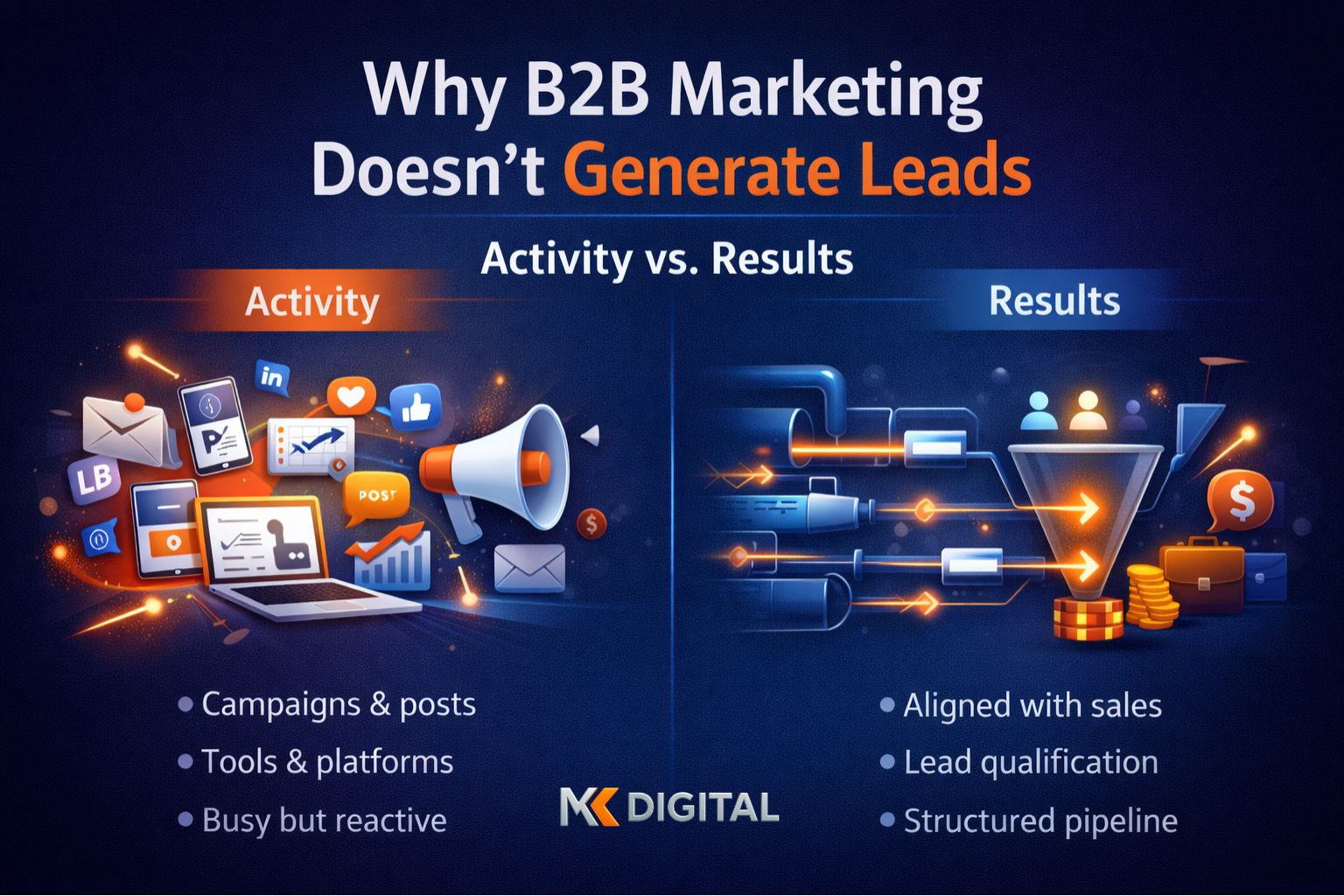
- leads are generated without a clear strategy
- marketing and sales are not aligned
- content does not support decision-making
- there is no structured process
As a result, lead generation becomes unpredictable.
👉 If this sounds familiar, it is worth understanding what is really happening inside your pipeline.
What B2B lead generation really means today
B2B lead generation is not about collecting contacts.
Instead, it is about attracting the right companies and helping them make decisions.
A modern approach focuses on:
- visibility among decision-makers
- trust built through relevant content
- consistent communication
- support for the sales process
Because of this, lead generation becomes part of a larger system.
How to generate B2B leads in 2026
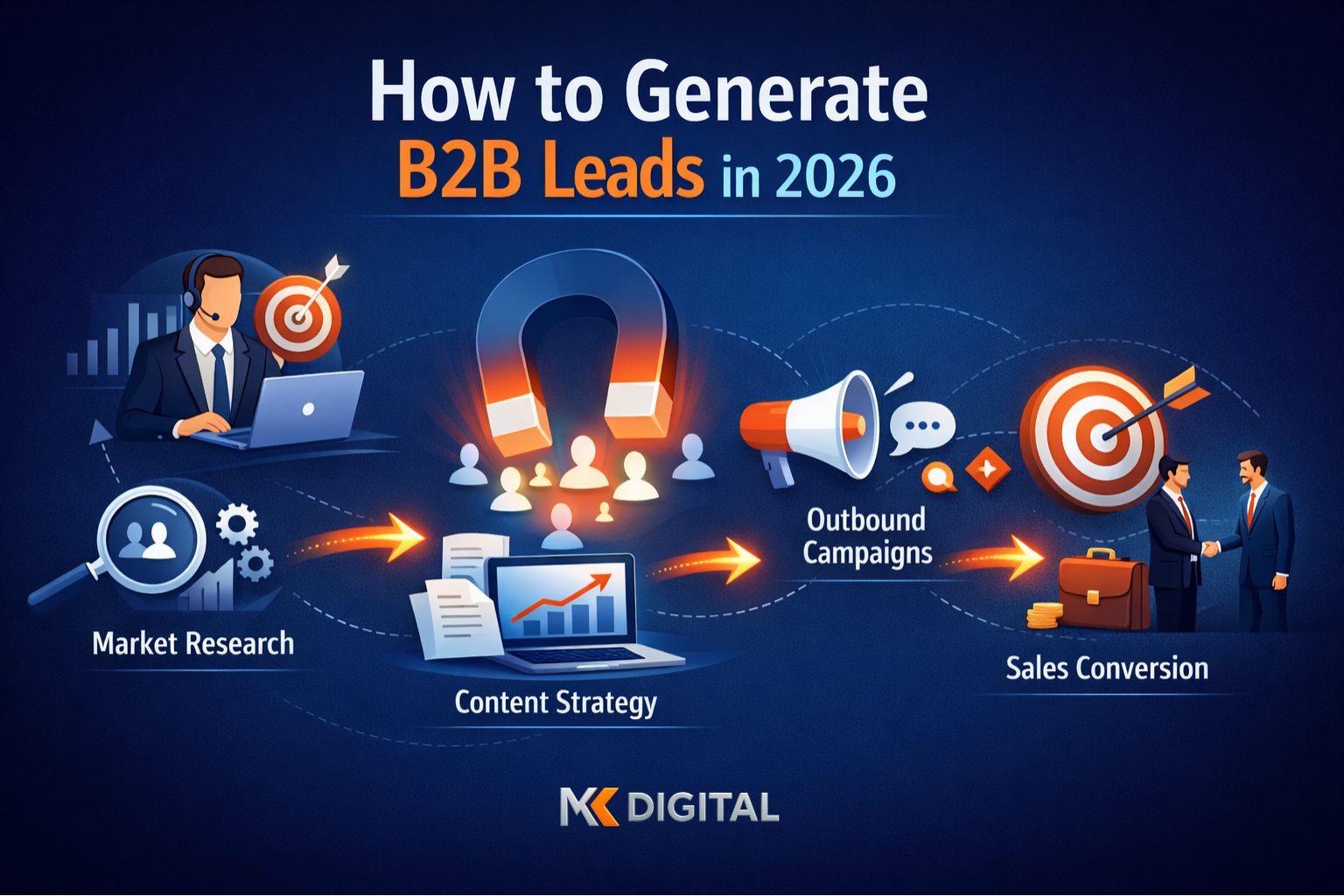
A structured approach usually includes four key elements:
1. Target the right companies
Before you generate leads, you need to define who you want to reach.
This includes:
- industries and segments
- company size
- decision-makers
Without this clarity, marketing becomes inefficient.
2. Build visibility where it matters
Your potential clients are already searching for solutions.
Therefore, you need to be visible:
- in Google search results
- on LinkedIn
- through relevant content
👉 This is where b2b lead generation systems start to work.
3. Create content that supports decisions
Content should not be random.
Instead, it should answer real business questions.
Effective content:
- explains complex topics
- reduces uncertainty
- builds trust
- supports conversations with sales
As a result, leads become more qualified.
4. Connect marketing with sales
This is where most companies fail.
Leads are generated.
However, they are not converted.
A working system:
- aligns marketing and sales
- supports each stage of the buying process
- focuses on conversion, not just traffic
Because of this, results improve significantly.
What works best in B2B lead generation today
Across industries, several patterns appear:
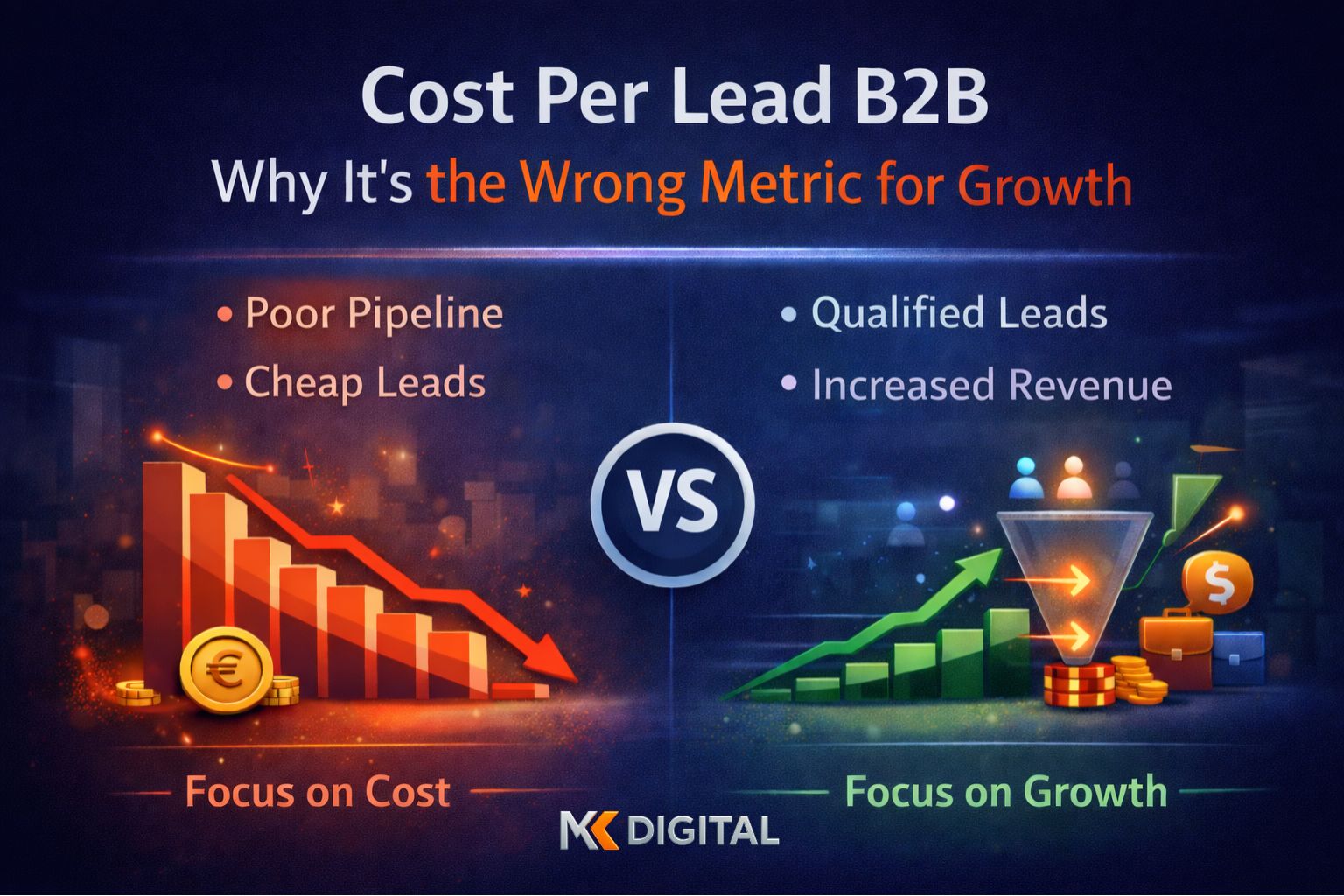
- quality matters more than volume
- consistency is more important than campaigns
- expertise wins over generic messaging
- systems outperform isolated activities
Therefore, companies that think long-term achieve better results.
Common mistakes to avoid
Many companies repeat the same mistakes:
- focusing on tools instead of strategy
- chasing quick results
- generating leads without qualification
- ignoring the sales process
Because of this, marketing becomes inefficient.
👉 If your b2b lead generation is not working, the problem is usually structural.
How to improve your B2B lead generation
Before you do more, it is worth understanding what works and what does not.
A structured approach helps you:
- identify bottlenecks
- prioritise actions
- improve conversion
- build a predictable pipeline
As a result, marketing starts to support growth.
Final thoughts
Generating B2B leads in 2026 is not about doing more.
It is about doing the right things in the right order.
Companies that build a system:
- generate better leads
- close more deals
- grow more consistently
If you want to understand what is limiting your lead generation: